Public activity, seminars and research output of the Center.
Events
July 2026 · Grupo Reforma
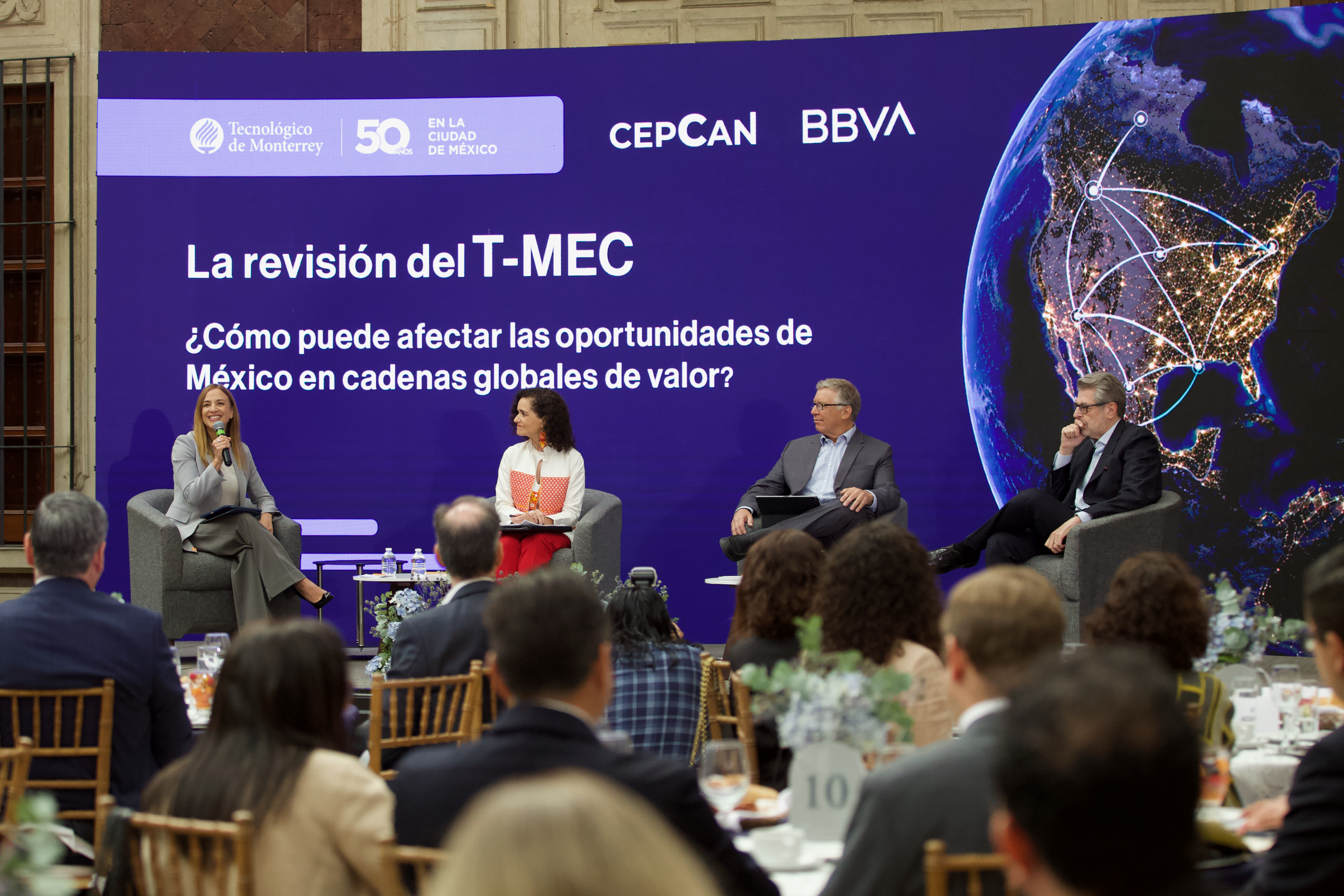
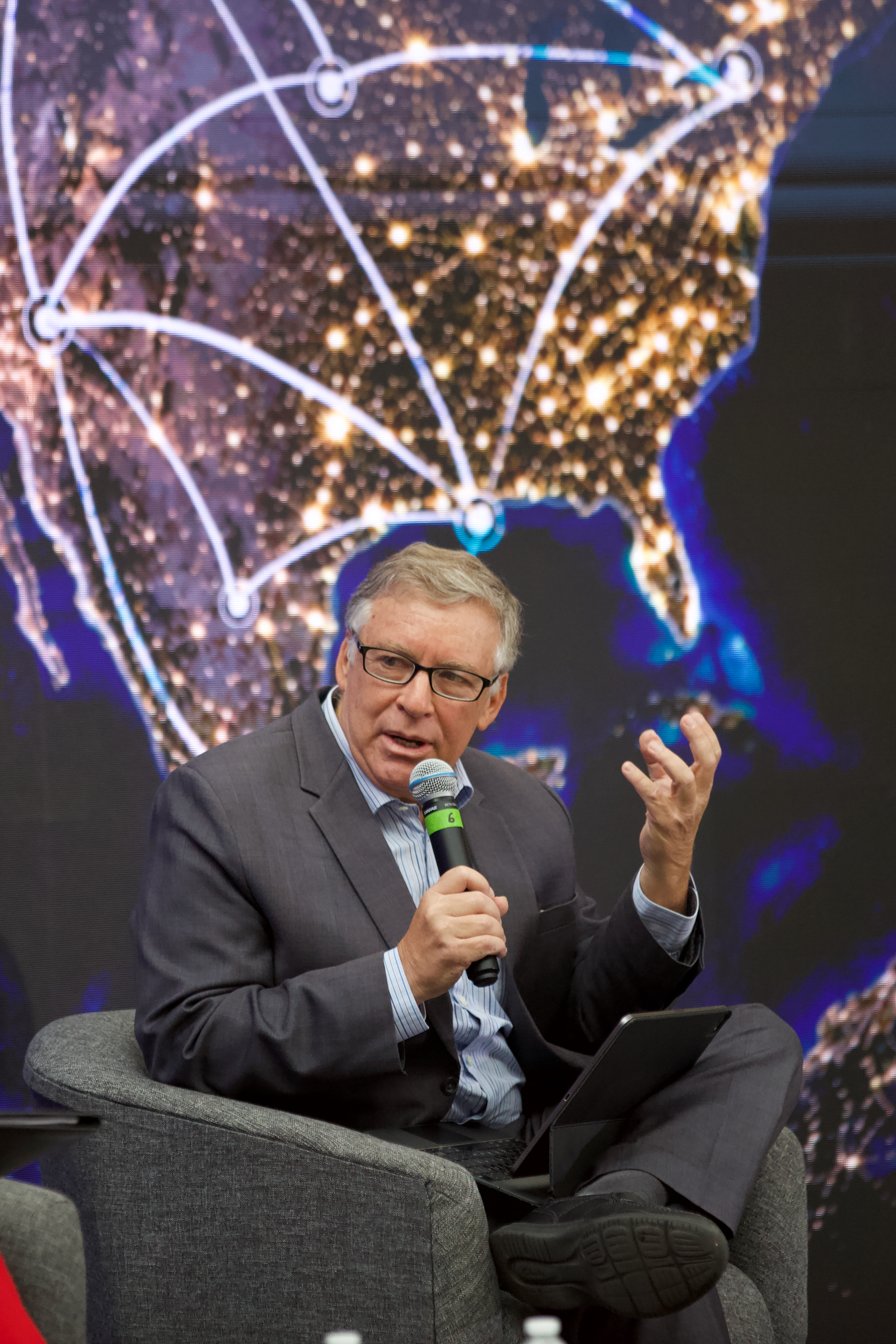
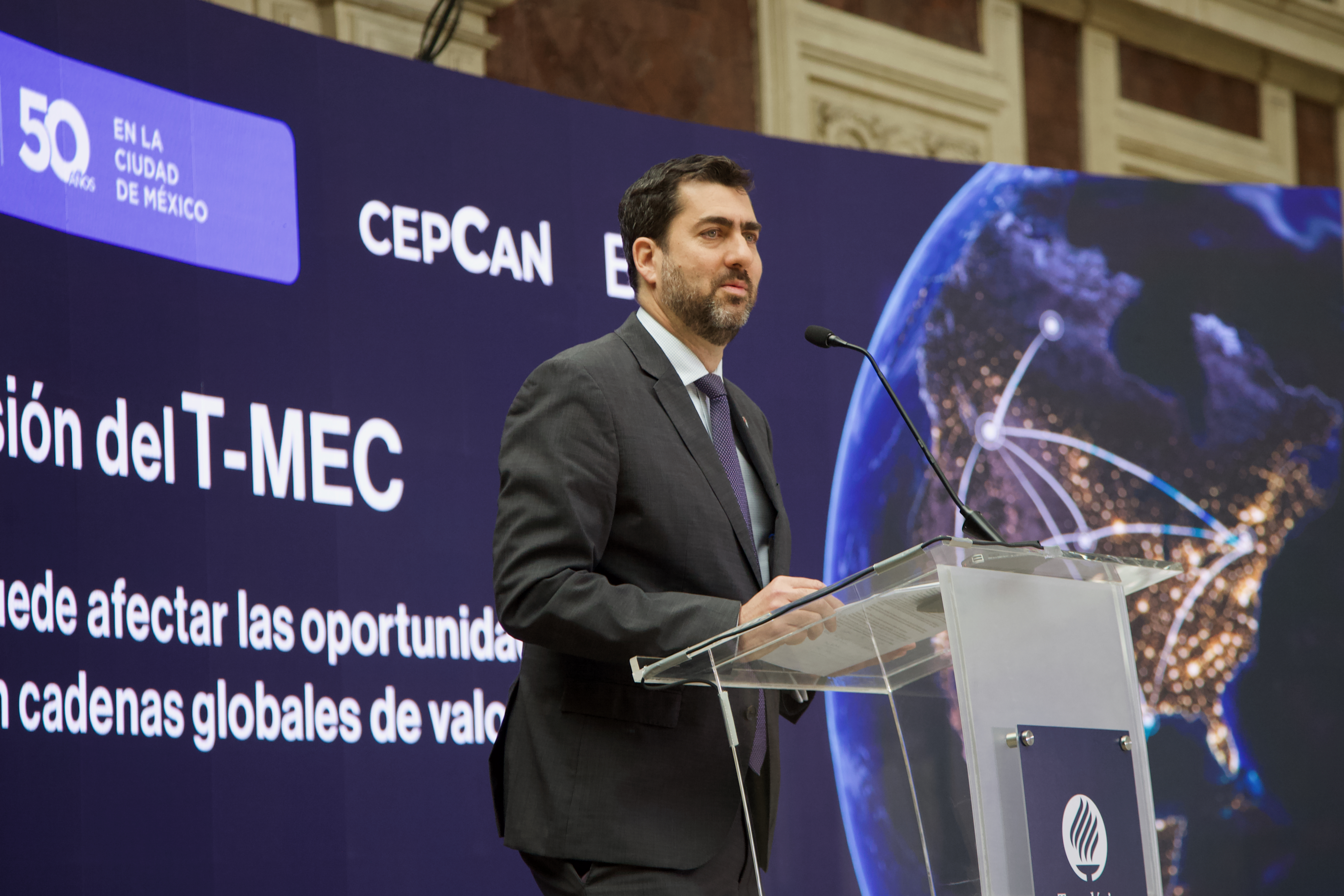
Breakfast forum: the USMCA review and global value chains
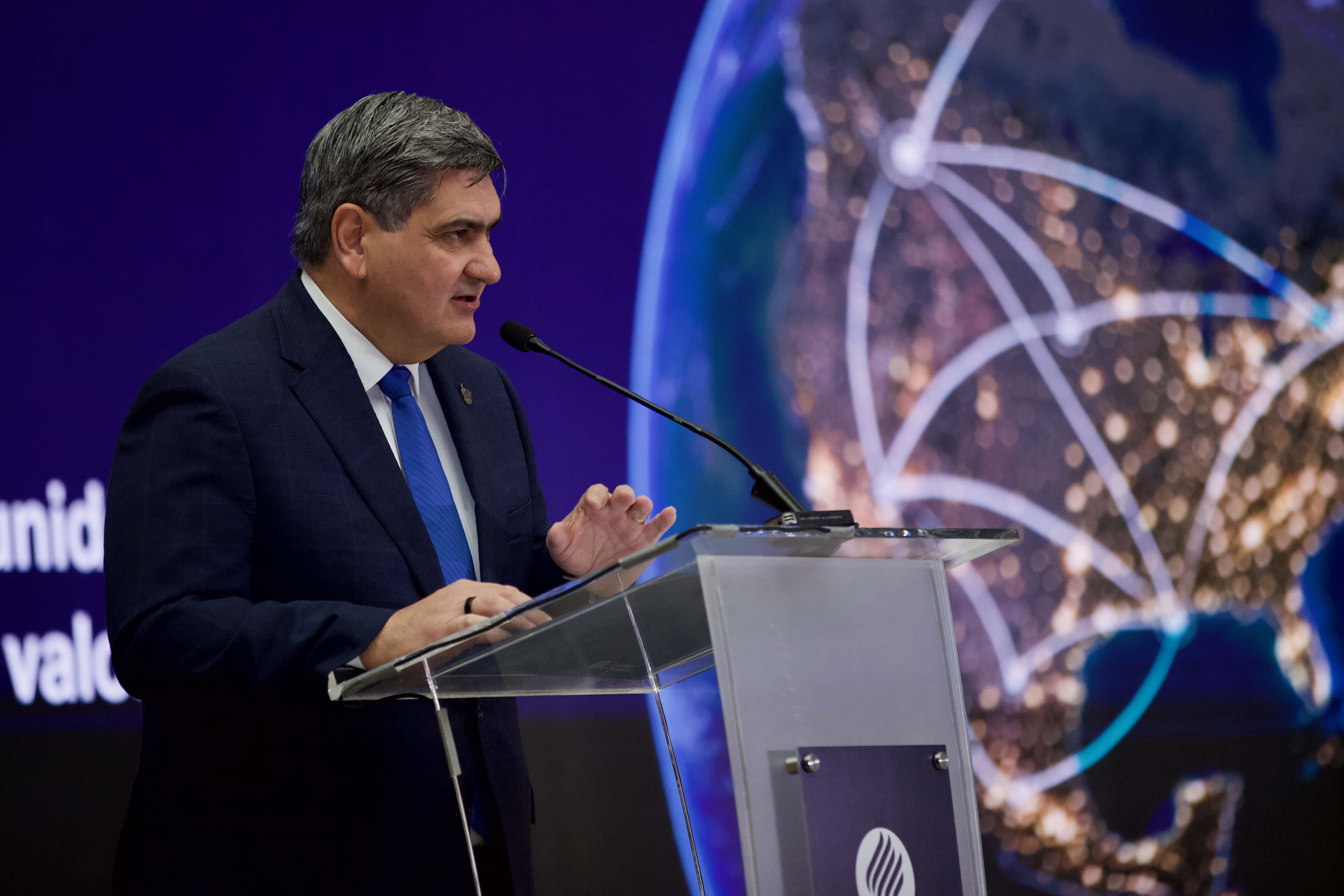
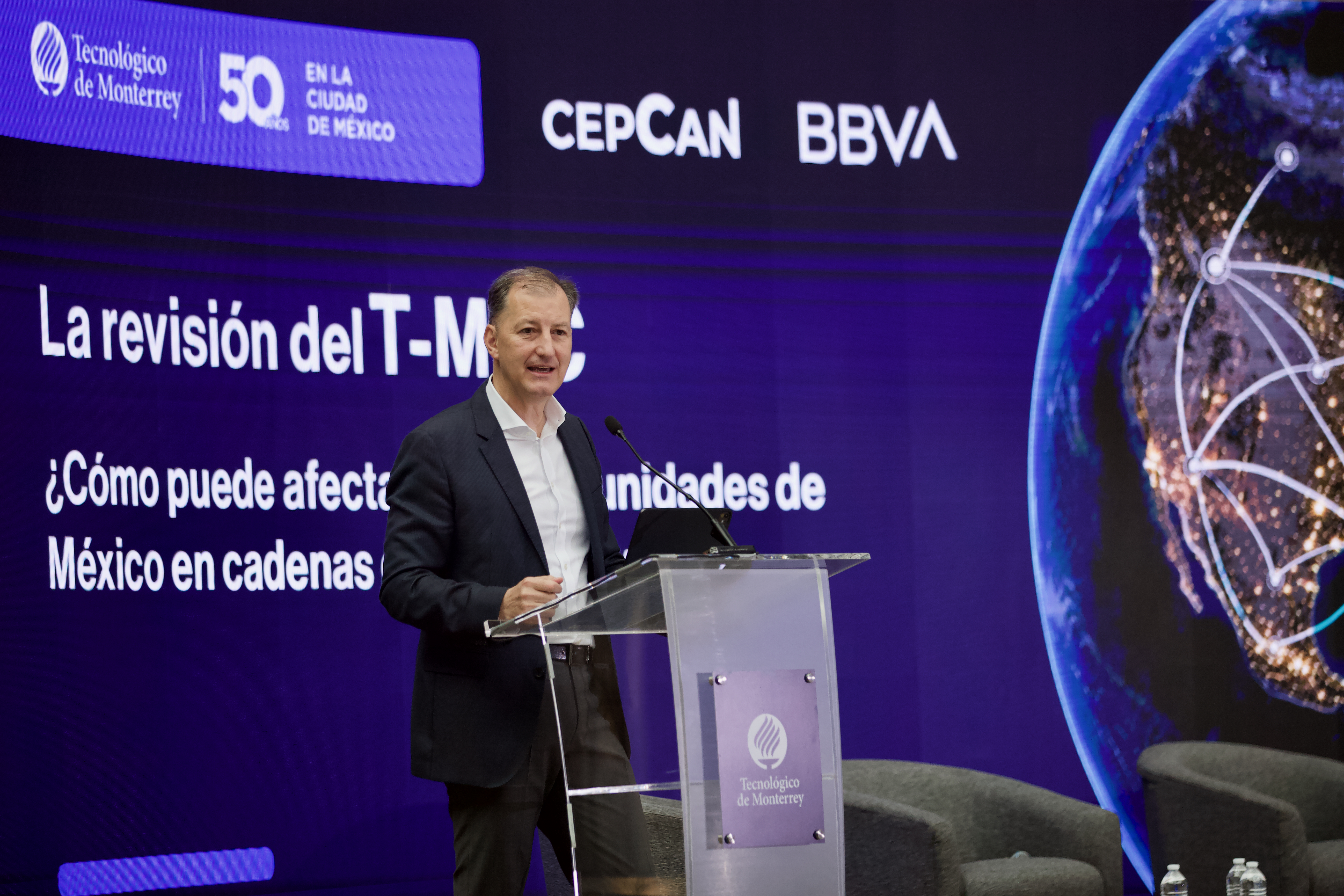
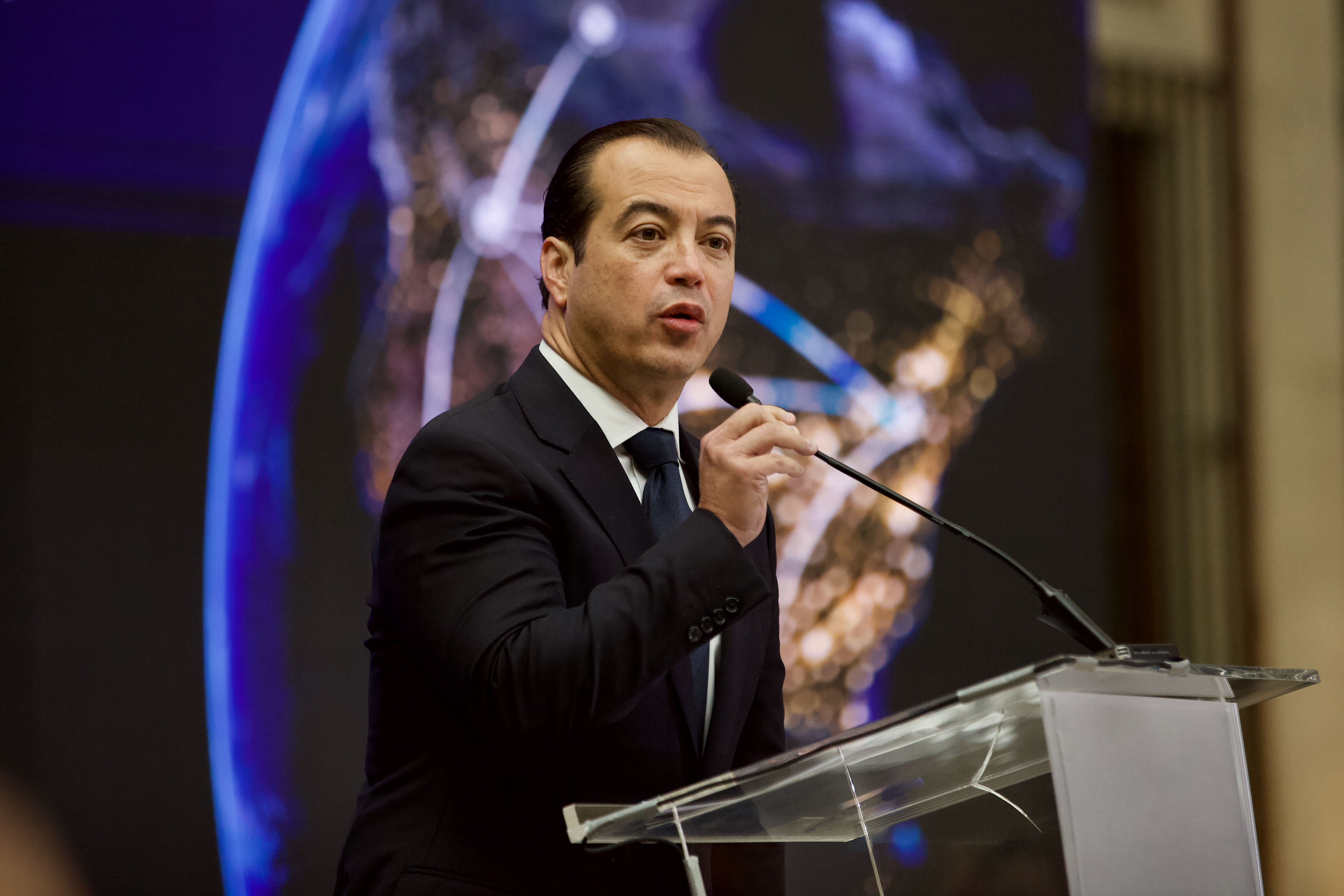
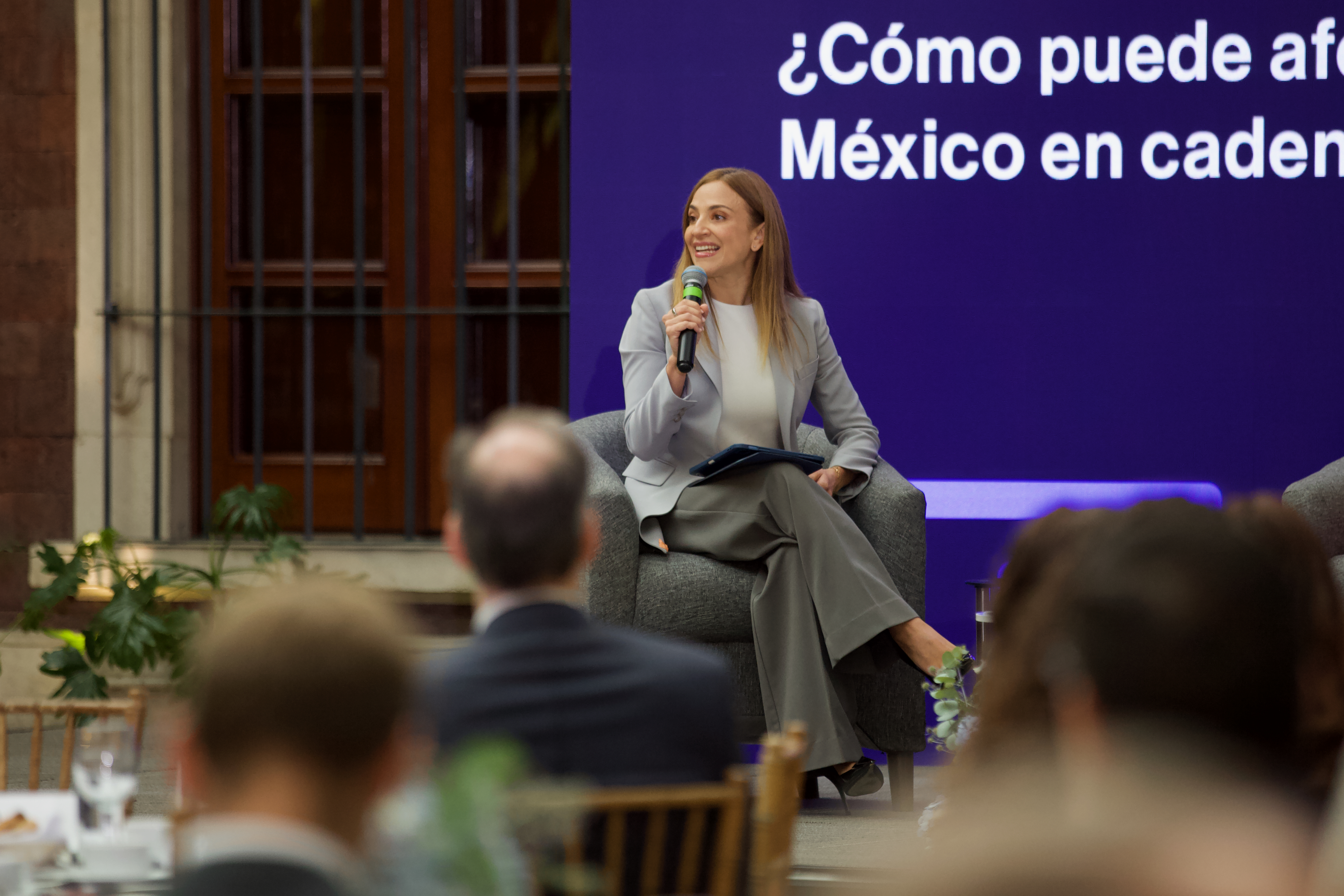
Breakfast forum organized by CEPCAN together with Tec de Monterrey and BBVA México at Grupo Reforma, with the participation of Luis Rosendo Gutiérrez Romano, Undersecretary for Foreign Trade.
Opening remarks were given by David Garza-Salazar and Alejandro Cárdenas Bortoni.
May 2026
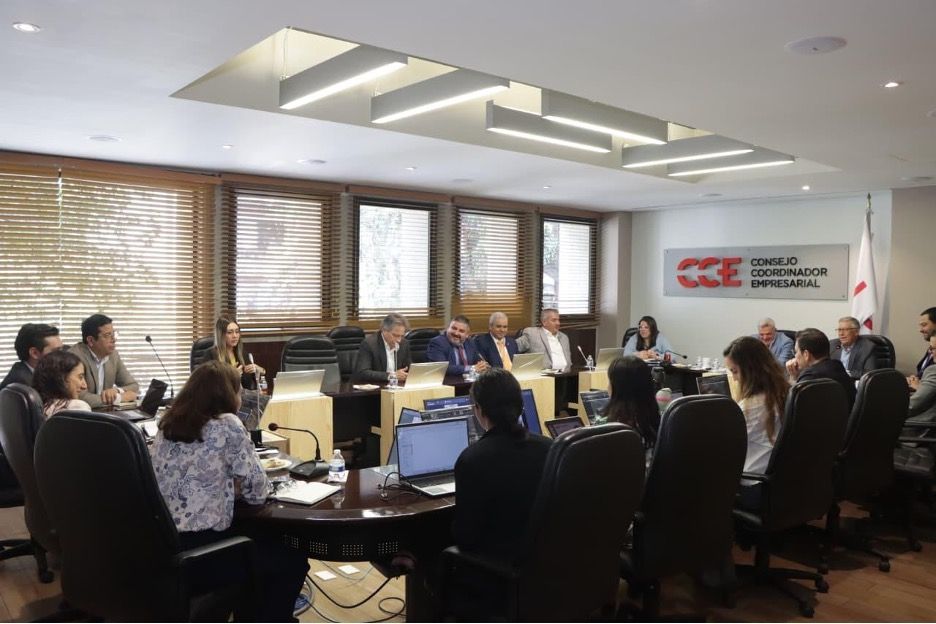
Presentation to the Business Coordinating Council (CCE)
Ernesto Stein visited the CCE, where he presented "Nearshoring in turbulent times", a study developed at CEPCAN.
The exchange with business leaders enriched the analysis of how Mexican SMEs integrate into global value chains.
March 2026
First CEPCAN workshop
We held the Center's first workshop, following the official launch of CEPCAN with the signing of the Tec–BBVA agreement in February 2026.
Welcome remarks were given by Paulina Campos and Miguel Ángel Santos, with the participation of Ricardo Hausmann, of the Harvard Growth Lab, and Jaime Zabludovsky, of IQOM Inteligencia Comercial.
February 2026
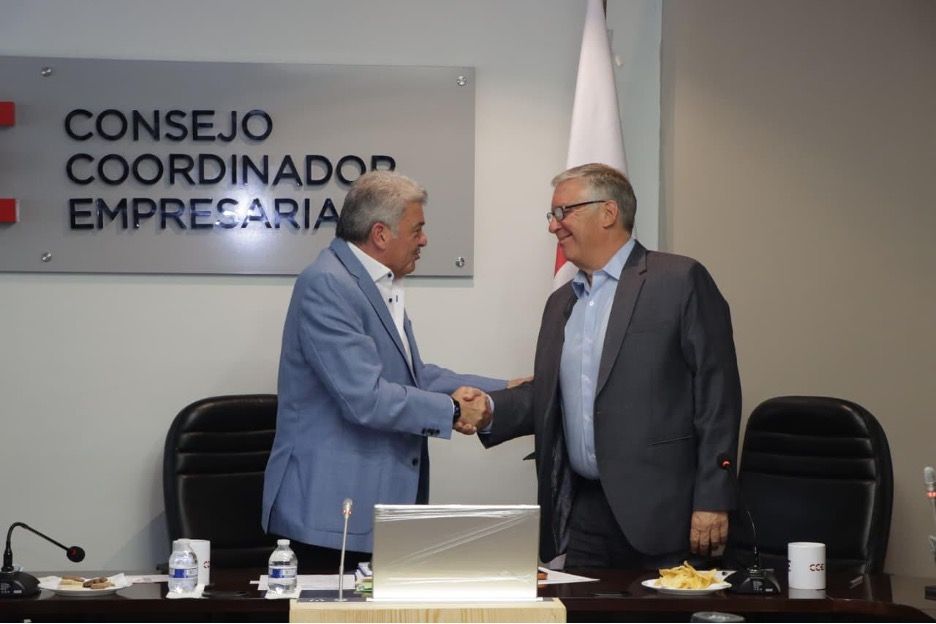
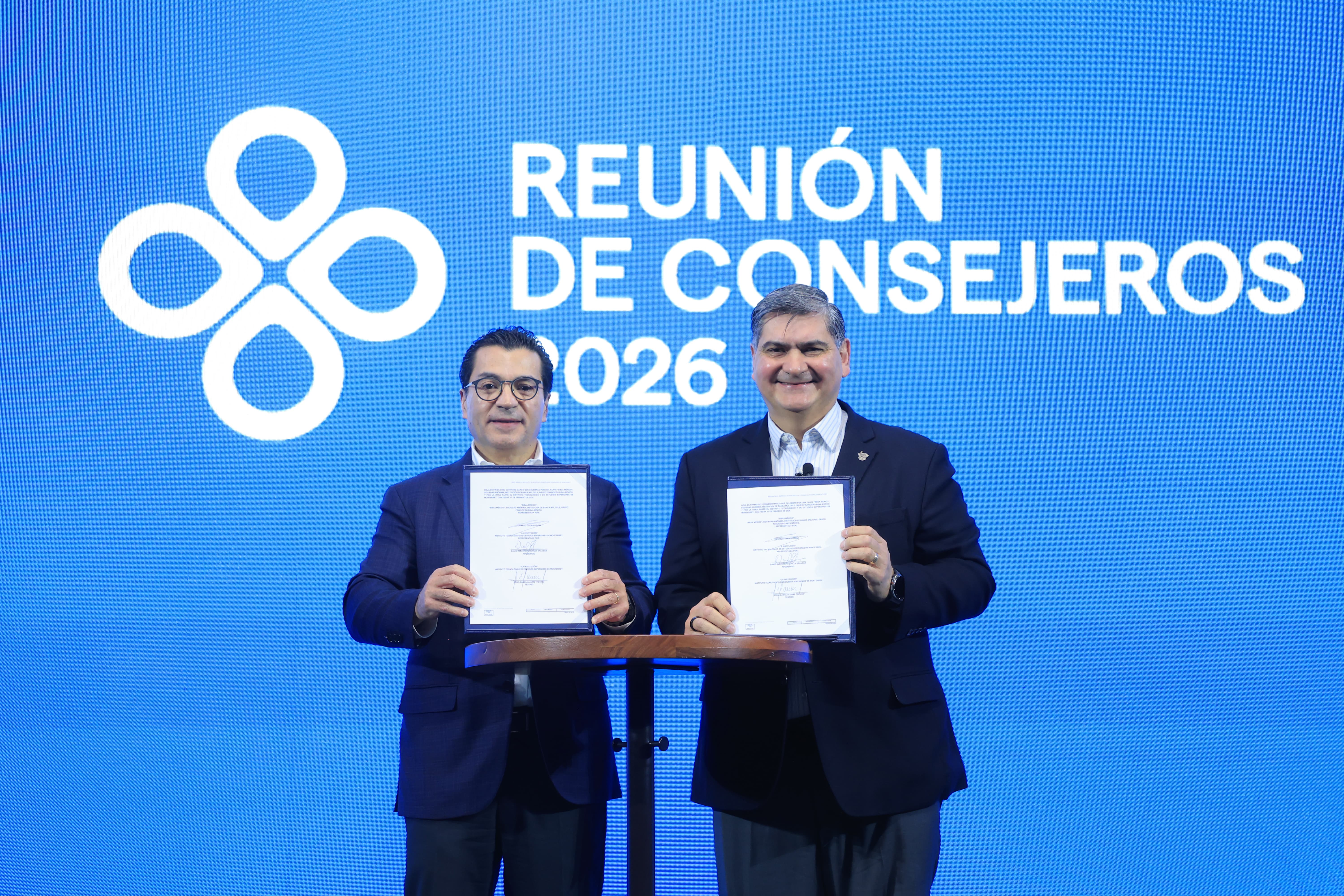
Signing of CEPCAN's founding agreement
North American trade policy is going through a moment without precedent in decades. The USMCA review and the reconfiguration of global value chains demand robust analytical capabilities.
CEPCAN was born out of that conviction, formalized through an agreement between David Garza, Executive President of Tecnológico de Monterrey, and Eduardo Osuna, CEO of BBVA México.
Upcoming activities of the Center will be added here as they are confirmed.
Publications
July 2026 · Atlantic Council GeoEconomics Center
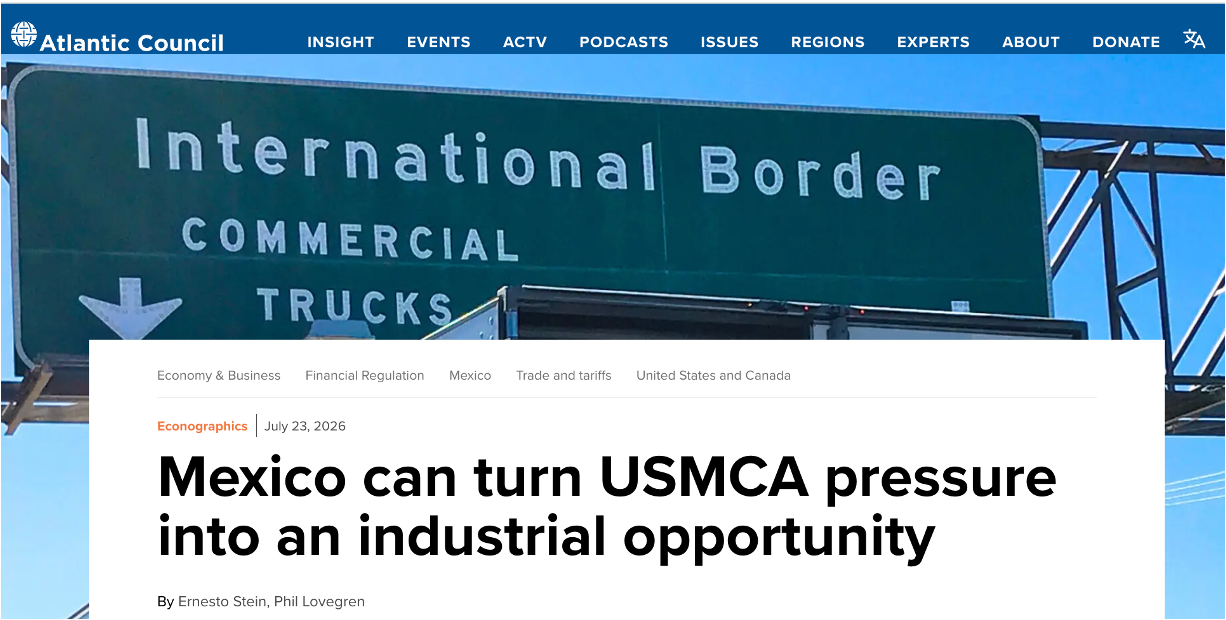
Mexico can turn USMCA pressure into an industrial policy opportunity
By Ernesto Stein and Phil Lovegren
Mexico is a key player in data processing equipment supply chains. The article proposes rules of origin with a regional value content requirement to develop local suppliers.
May 2026 · El Economista
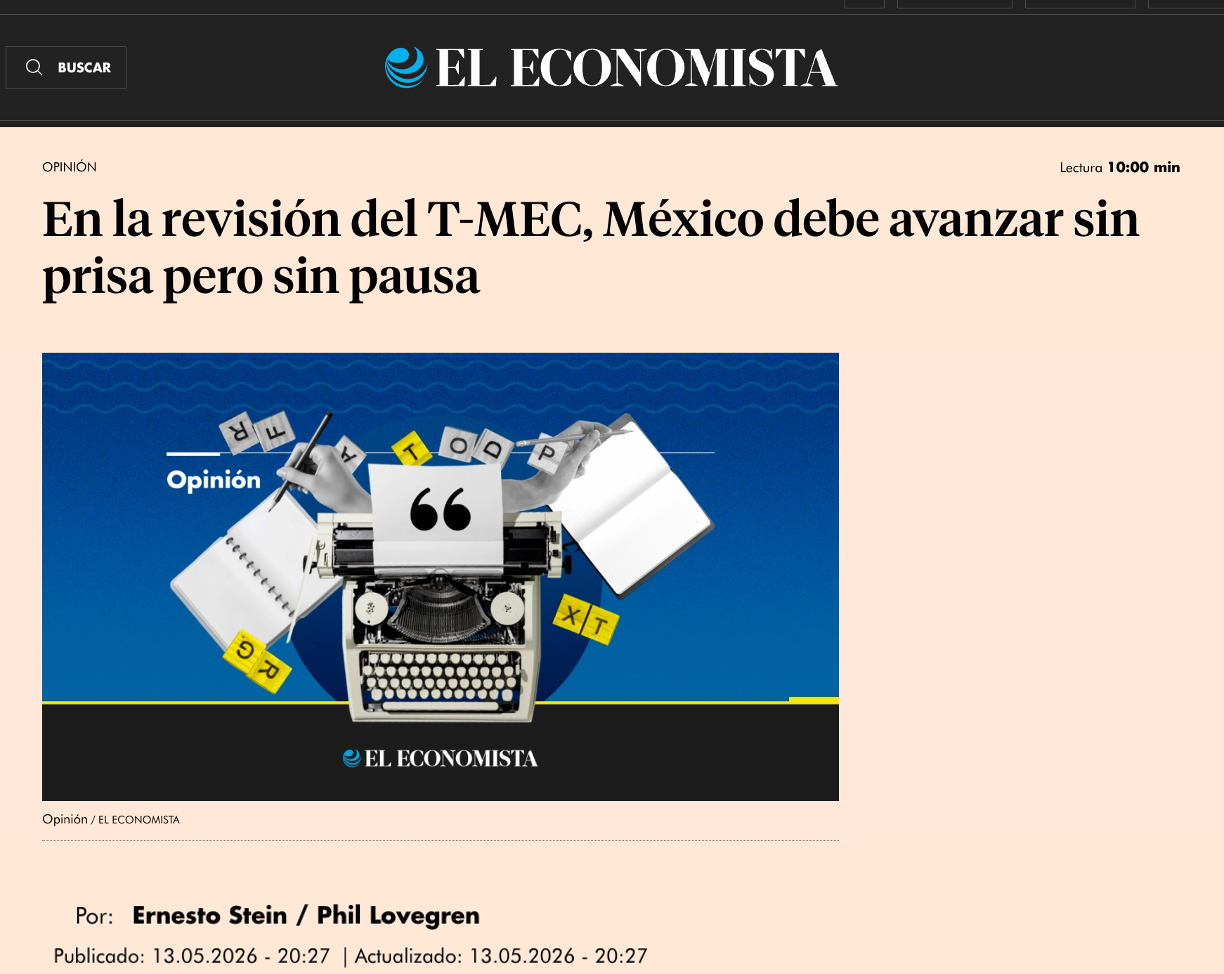
In the USMCA review, Mexico should move steadily but without haste
By Ernesto Stein and Phil Lovegren
A version of the same analysis published in El Economista, extending the argument to a Mexican audience.
April 2026 · Atlantic Council GeoEconomics Center
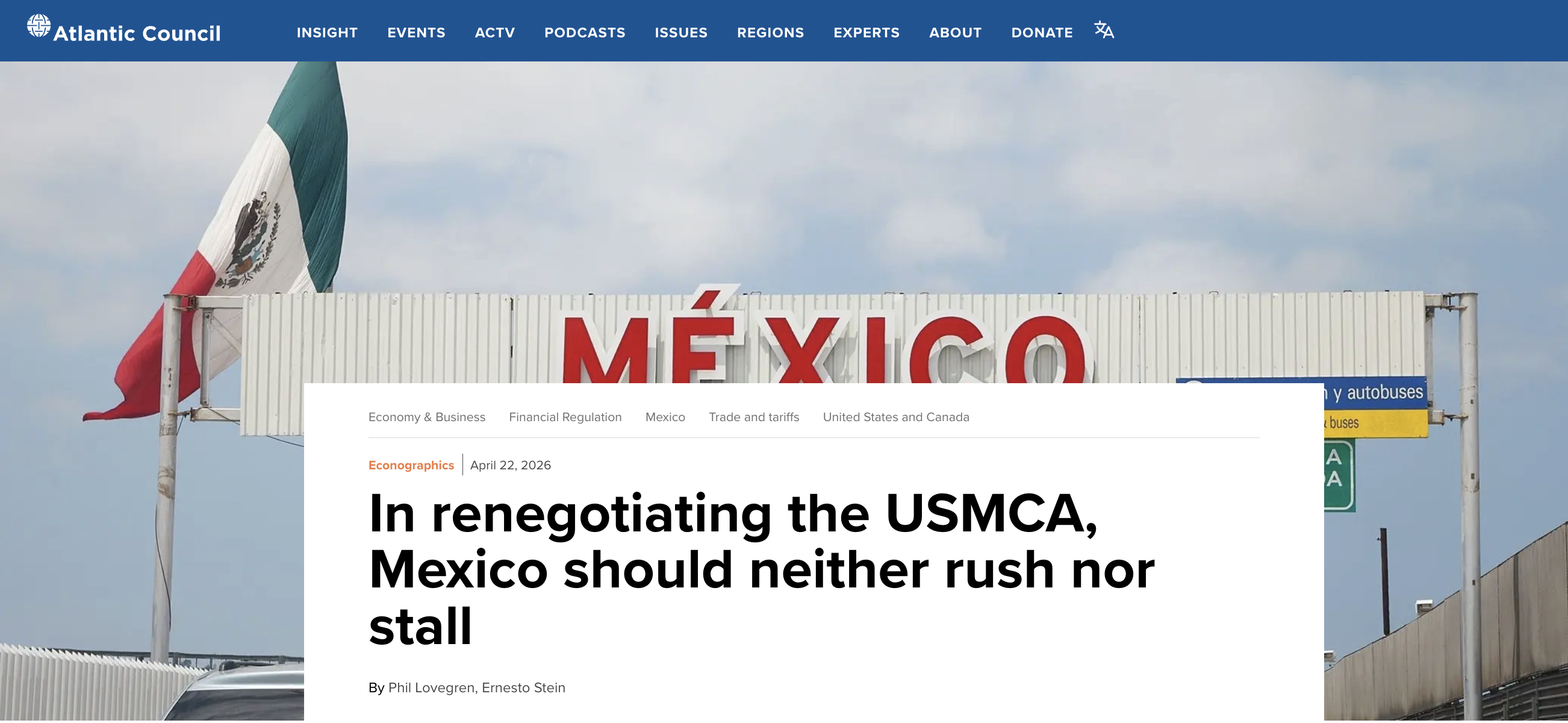
In renegotiating the USMCA, Mexico should neither rush nor stall
By Phil Lovegren and Ernesto Stein
Mexico and the United States — and Canada — share an interest in a mutually beneficial agreement. If that does not happen, Mexico faces a choice: concede in exchange for certainty, or hold out and wait for a more favorable environment.
Forthcoming analytical papers from the Center will be added to this section as they are published.
February 2026
Signing of CEPCAN's founding agreement
North American trade policy is going through a moment without precedent in decades. The USMCA review, the Trump administration's tariffs and the reconfiguration of global value chains demand robust analytical capabilities to identify the challenges and opportunities Mexico faces.
CEPCAN was born out of that conviction, formalized through an agreement between David Garza, Executive President of Tecnológico de Monterrey, and Eduardo Osuna, CEO of BBVA México, at the Board Meeting of Grupo Educativo Tec de Monterrey.
The Center brings together researchers from four Tec schools — Government and Public Transformation, Engineering and Sciences, Business (EGADE) and Social Sciences and Government — and the team of BBVA's Chief Economist, led by Carlos Serrano.
March 2026
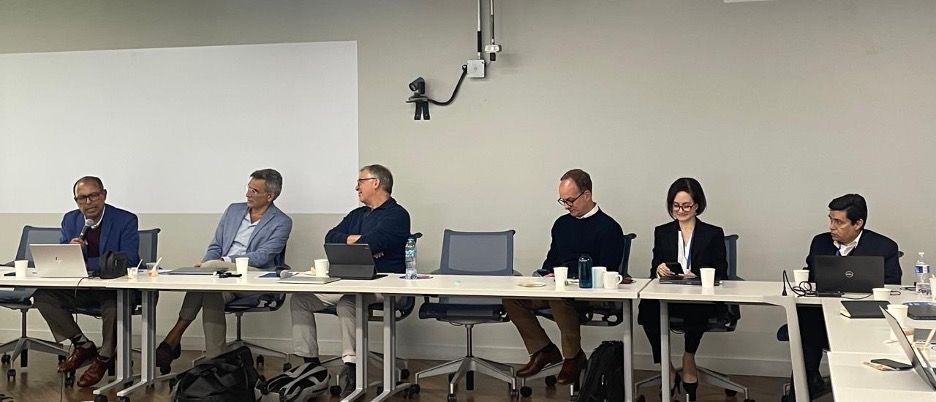
First CEPCAN workshop
We held the Center's first workshop, the starting point of a project that began taking shape a year earlier and was officially launched with the signing of the Tec–BBVA agreement in February 2026.
Welcome remarks were given by Paulina Campos and Miguel Ángel Santos, with the participation of Ricardo Hausmann, of the Harvard Growth Lab, who offered a vision of the Center's role: working with governments on their development challenges, training talent and developing new methodologies for policy analysis and implementation. Jaime Zabludovsky, vice president of IQOM Inteligencia Comercial, shared his views on the USMCA review.
Guests from various institutions also took part, along with the Center's researchers and collaborators, around its four thematic areas: monitoring trade policy in North America, integrating SMEs into value chains, strengthening institutional capacity to attract investment, and identifying opportunities in strategic sectors such as semiconductors and data centers.
May 2026
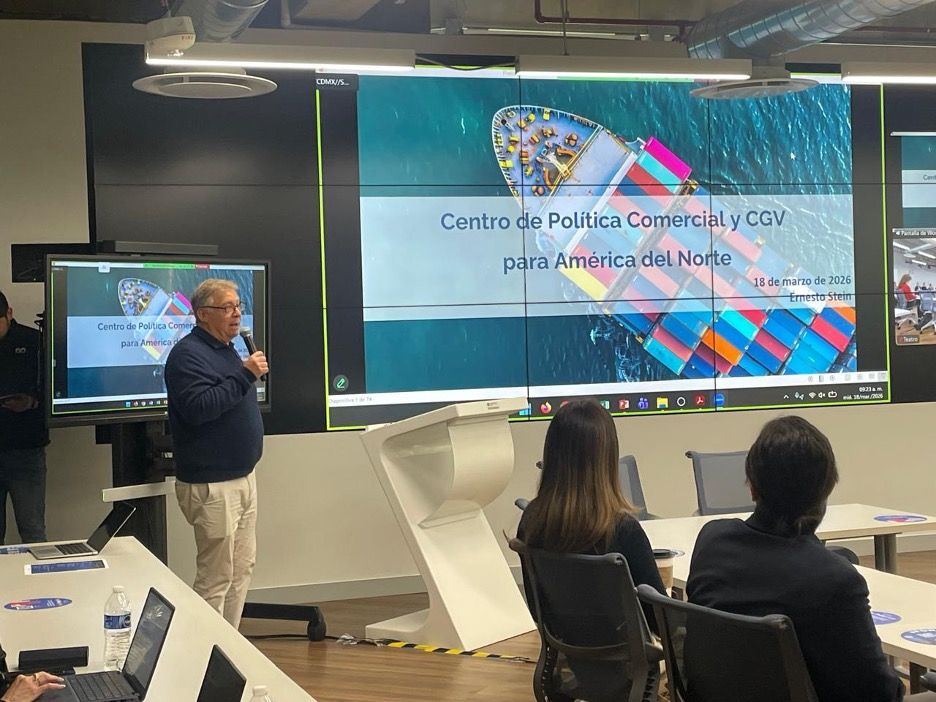
Presentation to the Business Coordinating Council (CCE)
Amid uncertainty over the Trump administration's tariffs and the USMCA review, Ernesto Stein visited the Business Coordinating Council (CCE), where he presented "Nearshoring in turbulent times", a study developed at CEPCAN, to the Investment and Relocation Committee.
The exchange with business leaders enriched the analysis with perspectives from the productive sector, opening new questions about how Mexican SMEs can better connect to global value chains. A second visit with the CCE's SME Committee was scheduled to deepen the dialogue.
We thank Max El-Mann Arazi, chair of the Committee, for the invitation.
July 2026 · Grupo Reforma
Breakfast forum: the USMCA review and global value chains
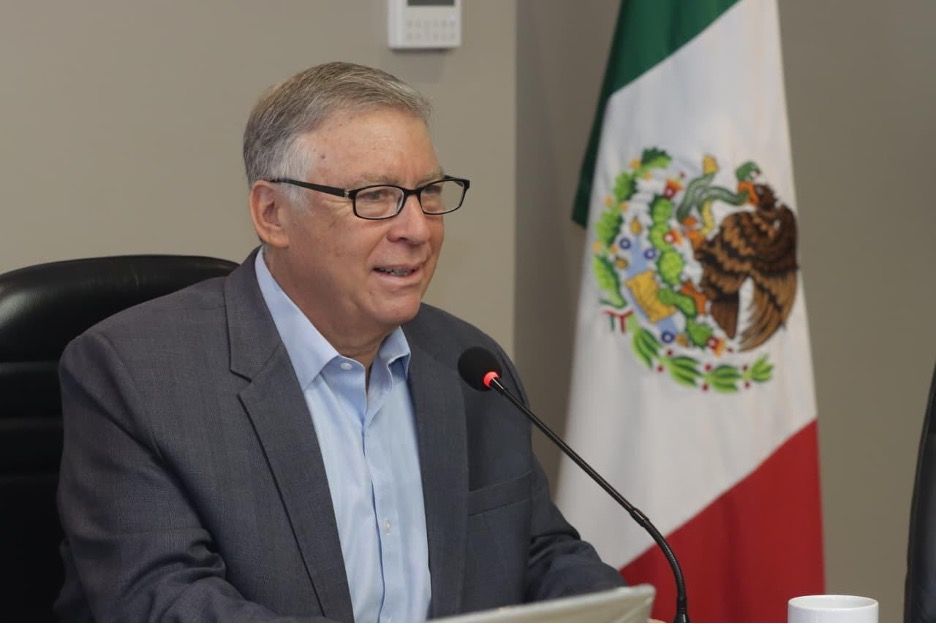
We took part in the breakfast forum "The USMCA review: how might it affect Mexico's opportunities in global value chains?", organized by CEPCAN together with Tecnológico de Monterrey and BBVA México at the offices of Grupo Reforma.
Opening remarks were given by David Garza-Salazar and Alejandro Cárdenas Bortoni, with the participation of Luis Rosendo Gutiérrez Romano, Undersecretary for Foreign Trade, who shared a positive reading: Mexico aims to reduce uncertainty around the annual reviews, secure the elimination of Section 232 tariffs on autos and steel, and strengthen North American regional integration by reducing dependence on inputs from outside the region.
Ernesto Stein then joined a panel with Jaime Zabludovsky and Beatriz Leycegui, moderated by Paulina Campos, discussing the new tariff landscape, the non-automatic renewal of the USMCA and its implications for nearshoring, the growing importance of rules of origin, and Mexico's negotiating stance ahead of the talks in Washington. Juan Pablo Murra Lascurain closed with a clear message: the USMCA opens doors, but seizing those opportunities requires building capabilities.
We thank Tec de Monterrey, BBVA México and Reforma for making this forum possible.
April 2026 · Atlantic Council GeoEconomics Center
In renegotiating the USMCA, Mexico should neither rush nor stall
Ideally, Mexico and the United States — and Canada — would reach a mutually beneficial agreement: there is enough common interest to make it possible. If that does not happen, Mexico faces a difficult choice: concede in exchange for certainty, or hold out and wait for a more favorable environment.
The article argues that Mexico has much to gain from negotiating well, and much to lose from negotiating in haste. It is the first article published by Ernesto Stein as director of CEPCAN.
May 2026 · El Economista
In the USMCA review, Mexico should move steadily but without haste
A version of the same analysis published in El Economista, extending to a Mexican audience the argument originally presented at the Atlantic Council.
July 2026 · Atlantic Council GeoEconomics Center
Mexico can turn USMCA pressure into an industrial policy opportunity
Mexico is a key player in North American supply chains for data processing equipment, the fastest-growing export sector in recent years. But local value added is minimal, and the sector's transformative potential will remain limited without a deeper ecosystem of domestic suppliers.
The article proposes modifying the sector's rules of origin to incorporate a modest, gradual regional value content requirement that would allow regional supplier networks to develop. Building that ecosystem would benefit both countries: it advances the goals of Plan México and supports US commercial and geopolitical objectives.